
Flexible Packaging Insights
Description: Practical guides on custom food, coffee, Mylar, and pet food packaging for brands, wholesalers, and buyers.
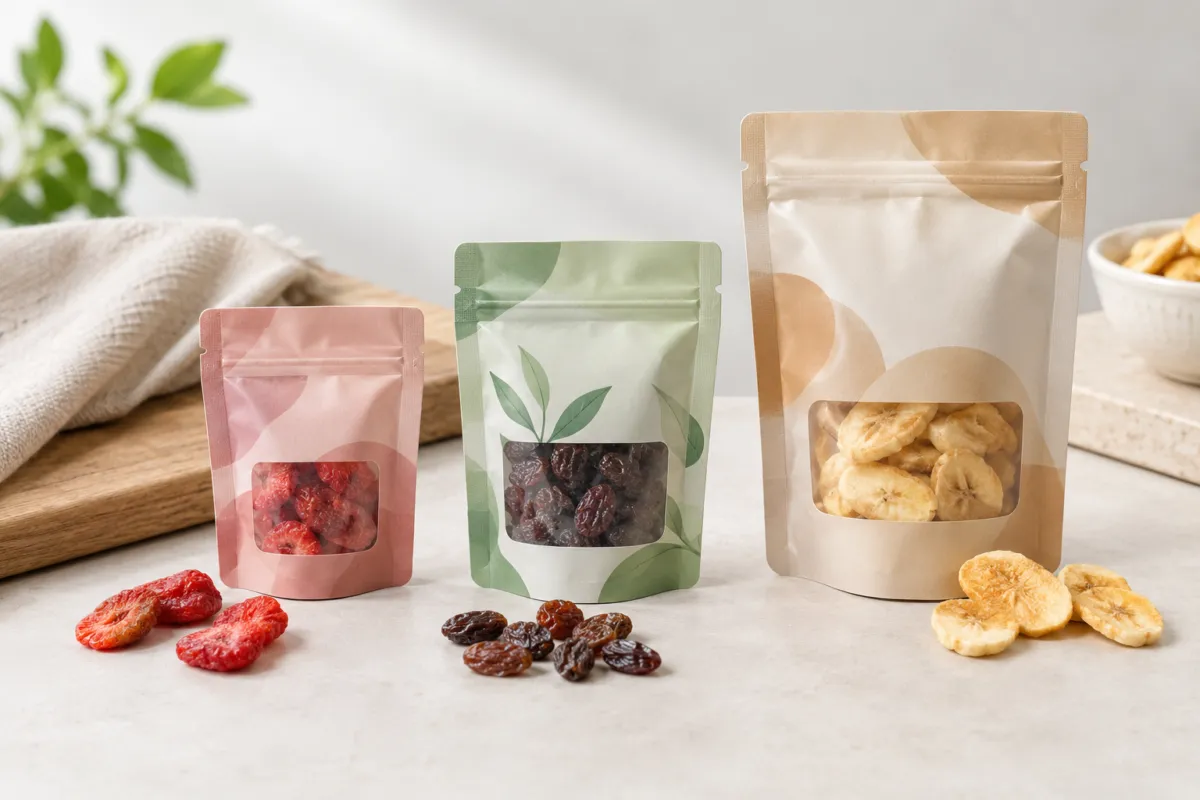
How to Choose Small Snack Packaging Pouches for 5g, 10g and 20g Packs
Small snack packs create different sizing, sealing, printing and MOQ questions from larger retail pouches. This guide explains how to specify 5g, 10g and 20g dried fruit or snack packaging before requesting samples or quotations.
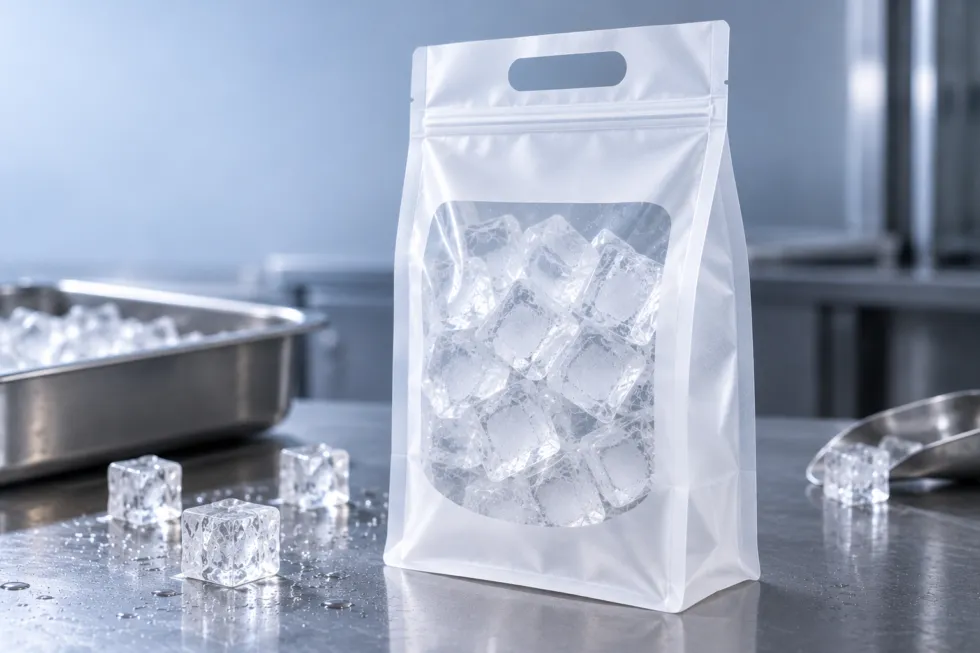
How to Choose Edible Ice Cube Packaging Bags for Retail Use
A bag for edible ice has a different job from a typical dry-food pouch. It comes into direct contact with food, stays frozen, carries a relatively heavy product, and is repeatedly pressed from the inside by hard, irregular cubes. If the pack also needs a flat bottom, large clear window, matte graphics and a carrying…
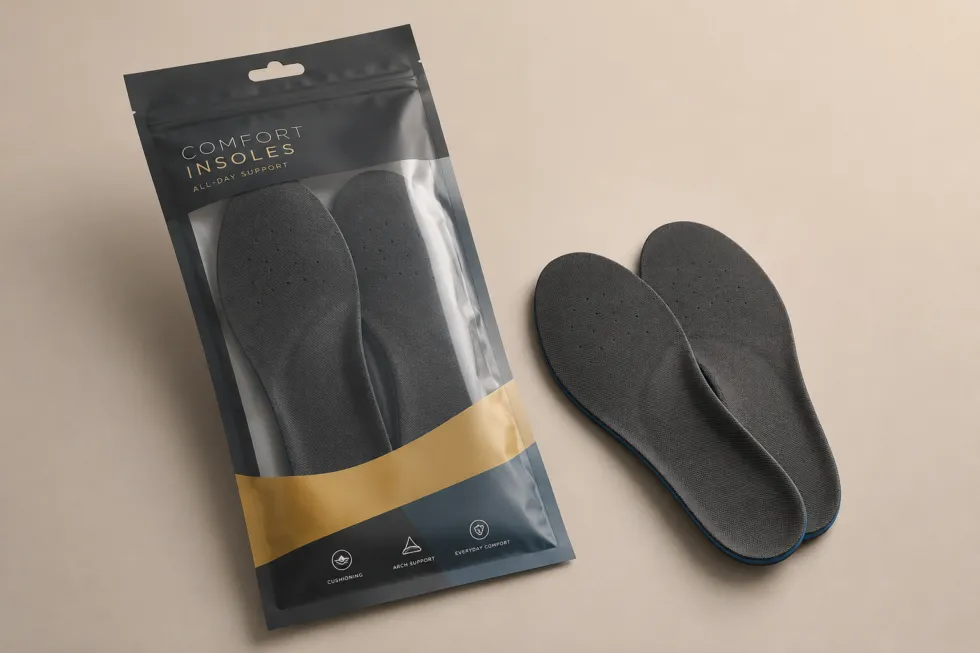
Custom Shoe Insole Packaging Bags: What Buyers Need to Specify Before Ordering
Learn what B2B buyers should confirm when sourcing custom shoe insole packaging bags, including product fit, bag dimensions, three-side seal format, hang holes, full-color printing, matte finish, and RFQ details. The guide helps buyers turn a basic packaging request into a clearer, more complete specification.
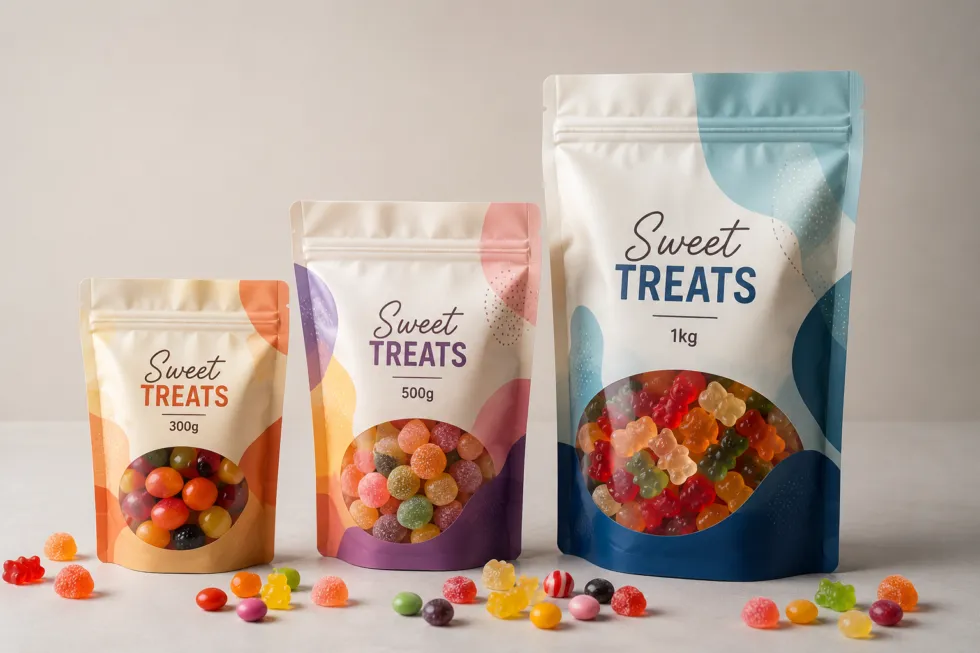
Custom Candy Bags for 300g, 500g, and 1kg: What Buyers Need to Specify
Learn what B2B buyers need to specify when sourcing custom candy bags for 300g, 500g, and 1kg products, including bag sizing, format, features, materials, artwork, and RFQ details. The guide explains why fill weight alone is not enough to determine the final packaging specification.

UK Food Packaging Requirements: What Importers Should Ask Suppliers
Quick Answer If you are importing food pouches into the UK, do not only ask: “Is this packaging food grade?” Ask for documents and specifications that match the exact pouch material you are buying. For most flexible food pouch projects, buyers should confirm: What to Check Why It Matters Exact material structure Confirms what the…
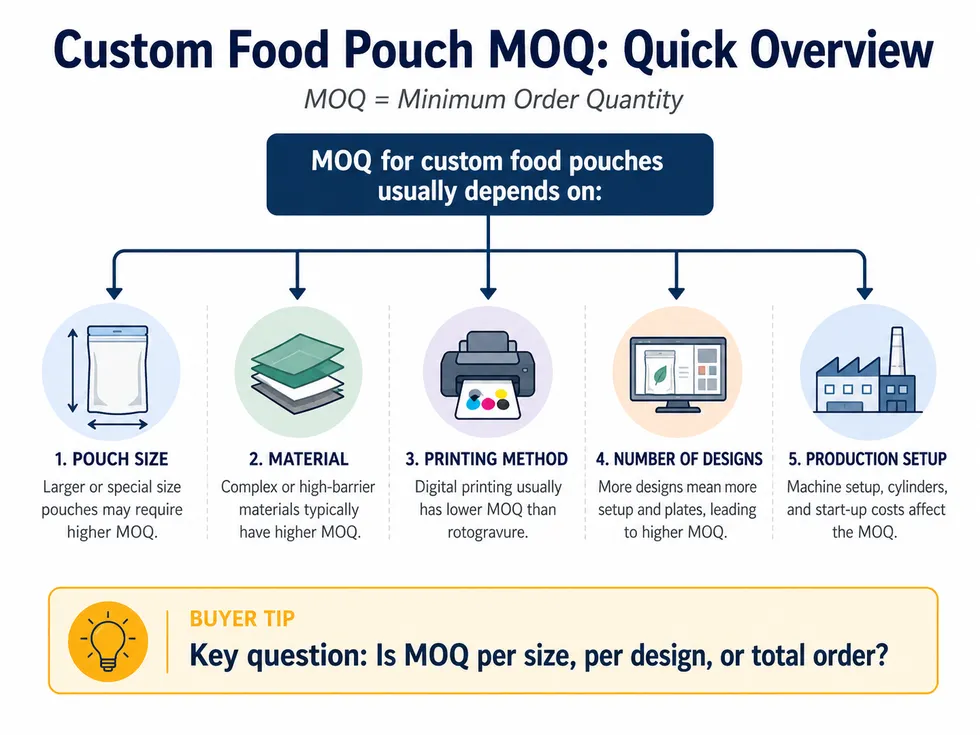
Custom Food Pouch MOQ: What Buyers Need to Know Before Ordering
Quick Answer MOQ means Minimum Order Quantity — the smallest quantity a supplier can produce for a specific pouch specification. For custom food pouches, MOQ usually depends on: pouch size, material, printing method, number of designs, and production setup. The most important question is not only: “What is your MOQ?” Ask: “Is the MOQ per…
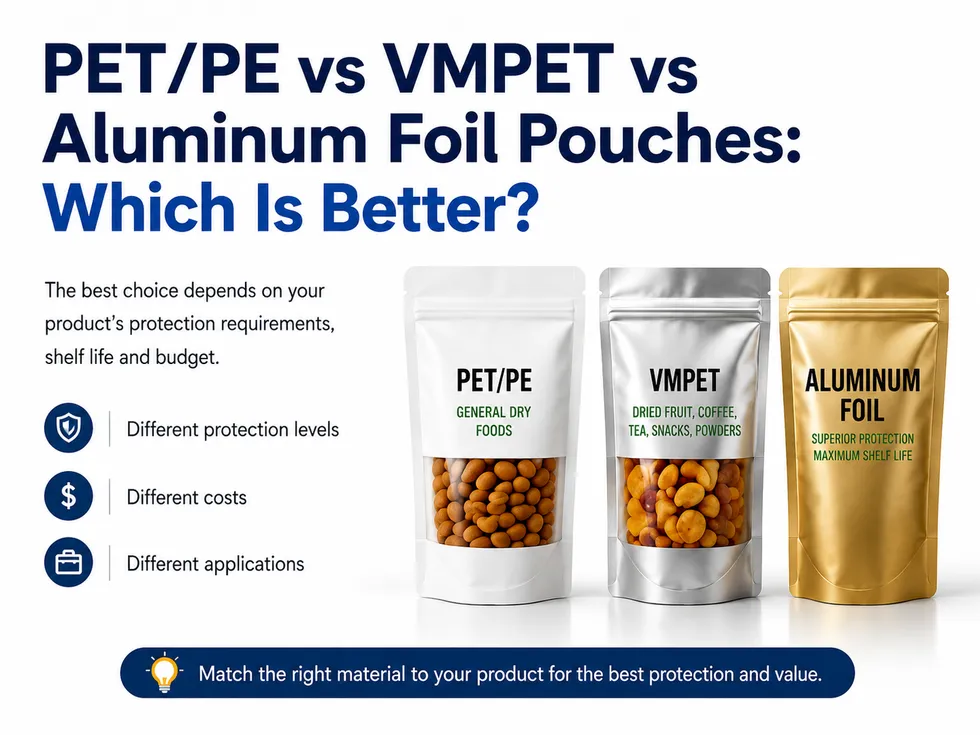
PET/PE vs VMPET vs Aluminum Foil Pouches: Which Is Better?
Quick Answer PET/PE, VMPET and aluminum foil are three common materials used for food pouches. The best choice depends on your product’s protection requirements, shelf life and budget. Material Structure Protection Level Best For PET/PE Standard General dry foods PET/VMPET/PE High Dried fruit, coffee, tea, snacks, powders PET/AL/PE Very High Sensitive products requiring maximum protection…
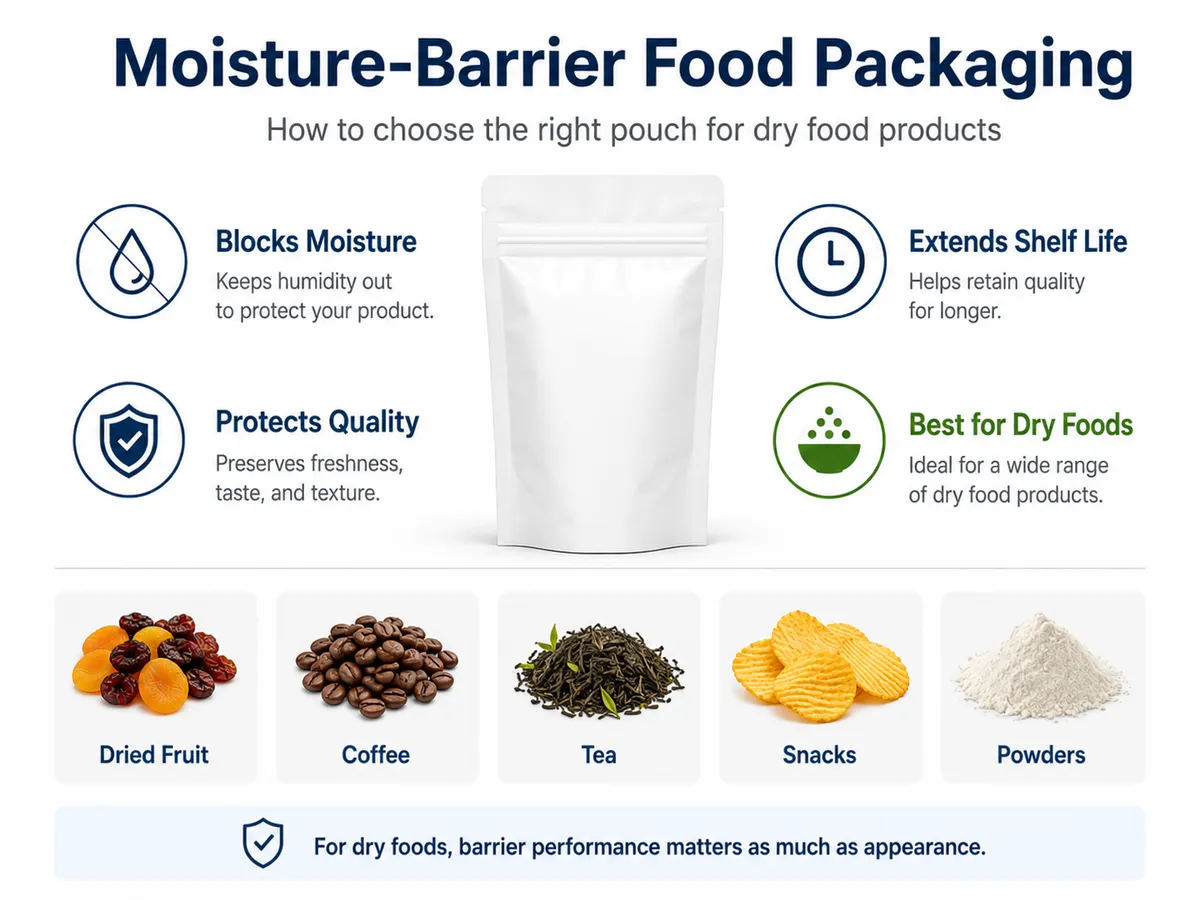
Moisture-Barrier Food Packaging: How to Choose the Right Pouch
Quick Answer Moisture-barrier food packaging helps protect products from humidity, water vapor and moisture damage. For dry foods such as: dried fruit, coffee, tea, snacks, nuts, spices, and powders, the right pouch material can help maintain: texture, freshness, flavor, and shelf life. Common moisture-barrier pouch options include: Material Structure Barrier Level Typical Applications PET/PE Standard…
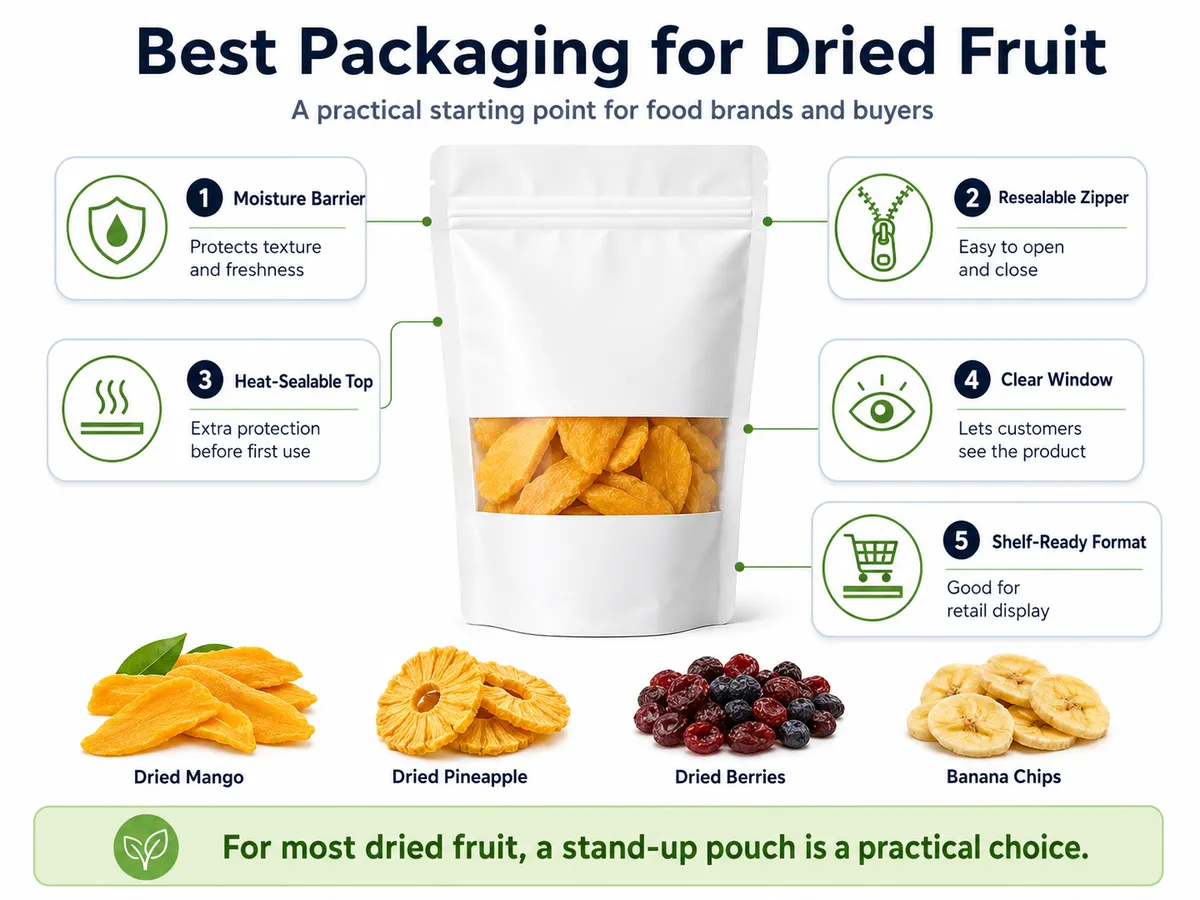
Best Packaging for Dried Fruit: Materials, Pouch Types & Features
Quick Answer For most dried fruit products, a stand-up pouch with a resealable zipper, heat-sealable top and good moisture barrier is a practical choice. The best material depends on how much protection the product needs from moisture, oxygen and light. Buyer Need Good Starting Option General dried fruit PET/PE pouch Better moisture and light barrier…
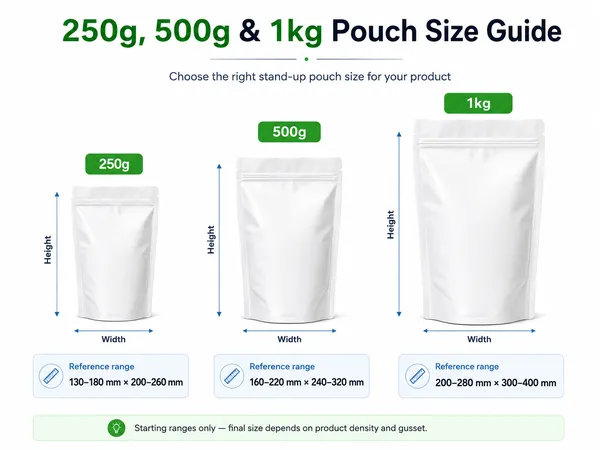
How to Choose 250g, 500g and 1kg Pouch Sizes for Food Products
Quick Answer There is no single standard pouch size for 250g, 500g or 1kg of food. The right size depends mainly on what you are packing and how much space the product takes up. For example, 500g of dried mango needs much more space than 500g of powder. As a general starting point for stand-up…
Get Your Packaging Quote
Tell us your packaging requirements. Our team will provide professional advice, pricing and production solutions.