
Custom Printed Food Pouches for Wet Pet Food: MOQ, Pricing & Setup
If the priority is the lowest practical quantity for six custom designs of a retortable wet pet food pouch, the first commercial variable to evaluate is the printing route—not just the pouch unit price. The current factory material for Honghai Packaging lists a digital printing MOQ of 500 pieces and a gravure printing MOQ of 20,000 pieces. These are general planning references, not a confirmed MOQ per design for a specific 12 × 10 × 3 cm retort project.
A final quotation also needs quantity per design, fill weight, product consistency, filling conditions, retort process, artwork status, storage and transport requirements, and target timing.
What Is the Lowest Practical MOQ for Custom Printed Food Pouches?
For the factory, the documented planning reference is 500 pieces for digital printing and 20,000 pieces for gravure printing. If quantity is the main constraint, digital printing is therefore the first route to evaluate. It does not mean that every six-design retort project can automatically be ordered at 500 pieces per design.
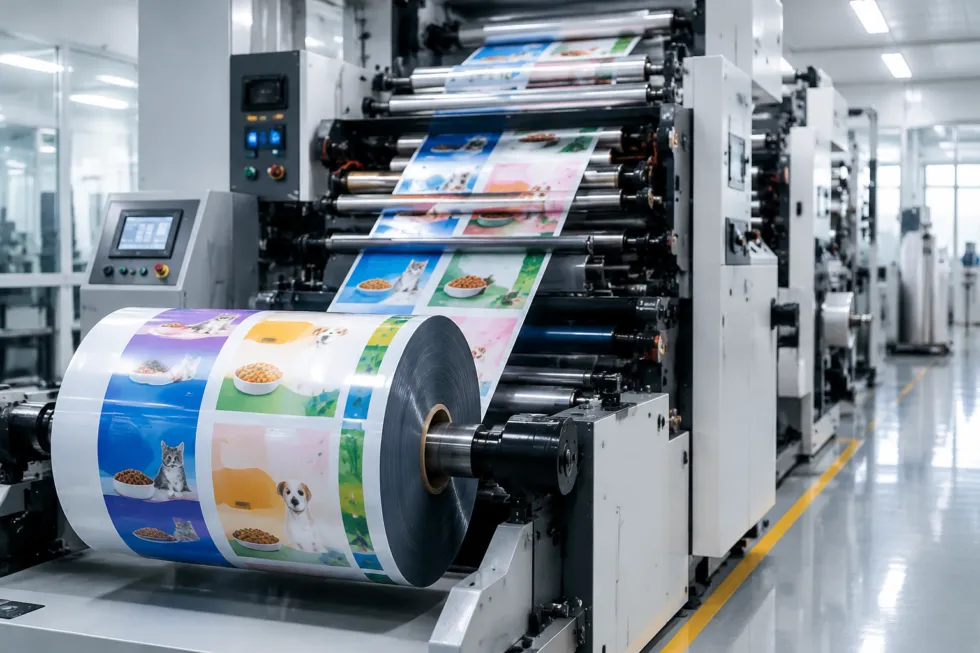
MOQ depends on the complete specification: pouch construction, dimensions, quantity per design, printing process, and production requirements. Retort applications add technical requirements that must be confirmed for the actual product and process.
Honghai’s Current Digital and Gravure MOQ References
| Printing route | Documented MOQ reference | Buyer should confirm |
|---|---|---|
| Digital printing | 500 pieces | Whether it applies per design to the exact retort specification |
| Gravure printing | 20,000 pieces | Whether the planned volume justifies cylinder/setup work |
The factory material also lists design at 1–3 days, cylinder preparation at 5–7 days, and production at 2–4 weeks. These are process references, not a guaranteed schedule for a specific order.
A separate equipment description for the HP digital press says the press supports variable data and patterns and describes it as having no MOQ. Because that statement and the project-planning MOQ are not scoped in the same way, buyers should ask for the MOQ that applies to their exact pouch specification rather than treating either statement as a blanket promise.
Decision rule: When quantity is the limiting factor, ask for the lowest practical digital-print option first, then compare it with a higher-volume gravure scenario if repeat demand supports it.
How Do Six Designs Affect MOQ and Total Cost?
Six designs should be treated as six SKU variables, not as a note at the bottom of the RFQ.
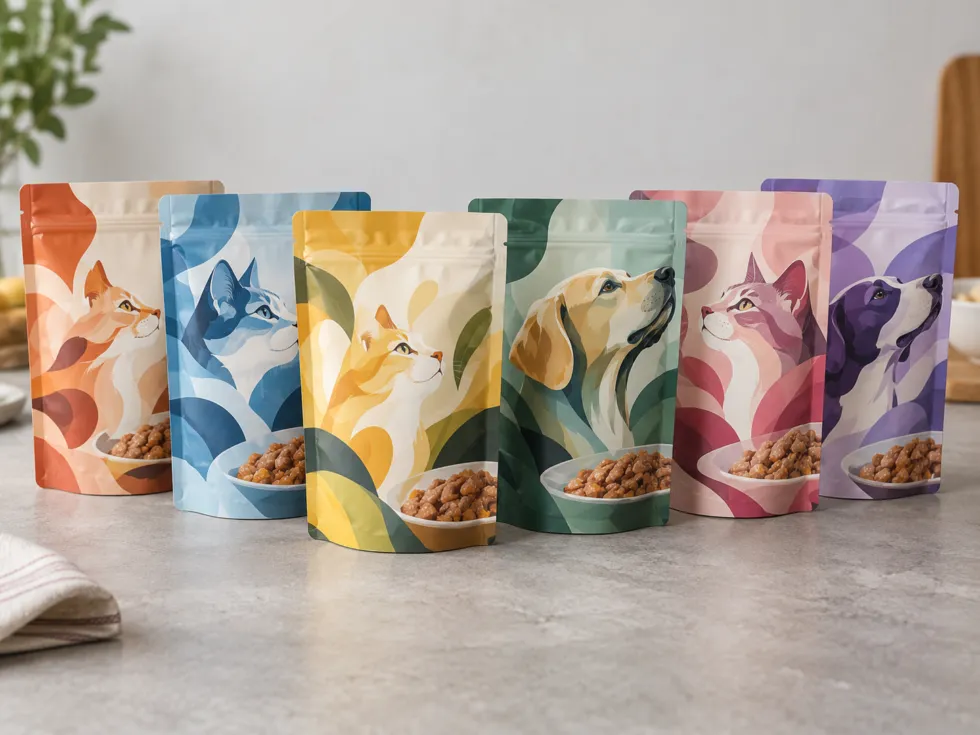
If all six designs use the same finished size, laminate structure, pouch construction, finish, and filling requirements, tell the supplier. That allows the production team to evaluate the project as one common specification with multiple artworks. It does not guarantee that one MOQ can be shared across all six designs.
If the designs use different sizes, materials, finishes, or functional features, each specification may need separate evaluation.
Per-Design MOQ vs Total Project Quantity
For procurement, provide both:
- Quantity for each design
- Total quantity across all designs
- Printing route requested or under consideration
- Whether the six designs share the same pouch specification
- Expected repeat volume, such as quarterly or yearly demand
Do not assume that six designs × 500 pieces is the confirmed MOQ. The available documentation supports 500 pieces as a digital-printing reference, but it does not establish a guaranteed per-design MOQ for this particular retort pouch.
A better question is:
“For six designs using the same pouch specification, what is the lowest quantity you can produce per design, and what setup costs apply?”
That gives the supplier a usable commercial problem to solve.
Digital vs. Gravure: Which Printing Route Fits a Low-Quantity Launch?
If the immediate goal is to minimize the first production quantity, digital printing is the first route to evaluate because the documented digital-printing MOQ is lower than the gravure reference. Gravure becomes more relevant when the planned volume and repeat demand make the cylinder/setup process commercially reasonable.
This is not a universal rule that digital printing is always cheaper.
| Buyer condition | Route to evaluate first | Main trade-off |
|---|---|---|
| Low initial quantity | Digital | Lower documented MOQ reference; compare project-specific economics |
| Several designs for a launch or test | Digital | Lower quantity may reduce inventory exposure; confirm per-design MOQ |
| Large, repeatable volume | Gravure | Higher documented MOQ reference; include cylinder/setup costs |
| Uncertain future demand | Compare both | Avoid choosing from unit price alone |
The factory materials document both digital and rotogravure printing and list cylinder preparation as a separate process reference.
Buyer mistake: comparing only the price per pouch. For a multi-SKU launch, compare unit price, setup, quantity commitment, inventory exposure, and expected repeat volume together.
What Makes a Wet Pet Food Pouch Retortable?
A retortable pouch is not simply a standard stand-up pouch with a “retort” label. The laminate, sealing system, pouch construction, filling conditions, and thermal process need to work together.
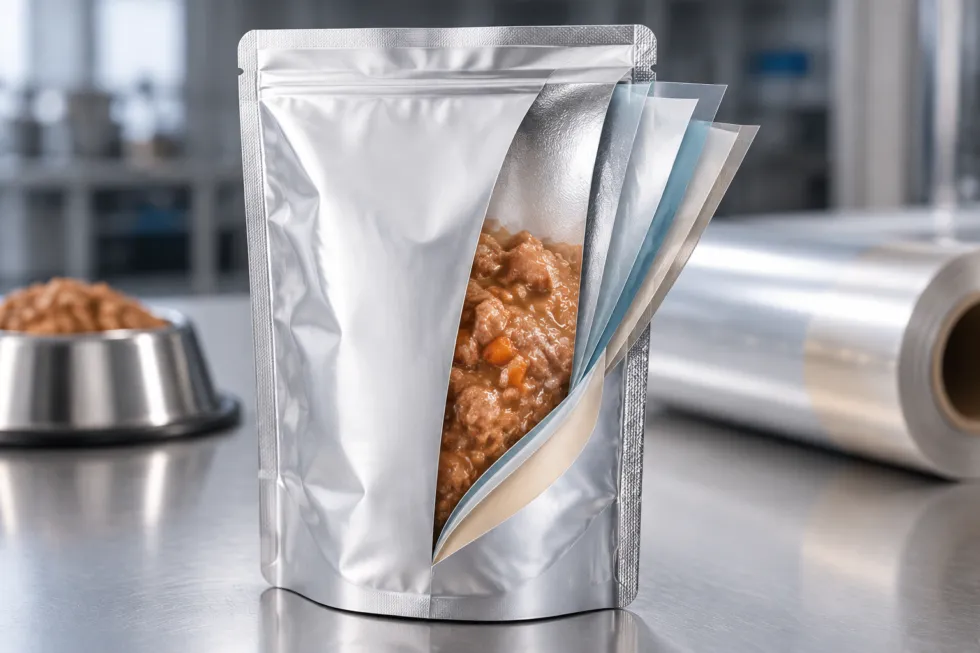
The Honghai material reference lists PET/BOPA/AL/RCPP as a retort film for high-performance application and lists RCPP among its heat-sealing layer materials. This is a documented material direction, not a final specification for every wet pet food project.
FDA guidance on retortable pouches identifies seal-bar temperature, pressure, dwell time, and a clean, wrinkle-free sealing area as important factors in reliable heat sealing. It also addresses the mechanical effects that retort processing can place on flexible pouches. (fda.gov)
Retort Is a Process Requirement
Before final material approval, provide, where available:
- Retort method and process information
- Processing temperature and time
- Filling temperature
- Product consistency and fill weight
- Filling and sealing method
- Any known handling or package-restraint requirements
The exact retort process for this project is not provided. No temperature, pressure, time, shelf-life target, or test value should be assumed.
Honghai’s Documented Retort Material Direction
The Honghai reference includes PET/BOPA/AL/RCPP under foil barrier films and describes it as retort film for high-performance application. The broader material reference also separates printing, barrier, and heat-sealing layers.
The procurement step is to have the supplier confirm the final structure against the actual wet pet food and retort process.
Is 12 × 10 × 3 cm Enough to Get an Accurate Quote?
No. The 12 × 10 × 3 cm dimension is a useful starting point, but it does not define the complete packaging requirement.
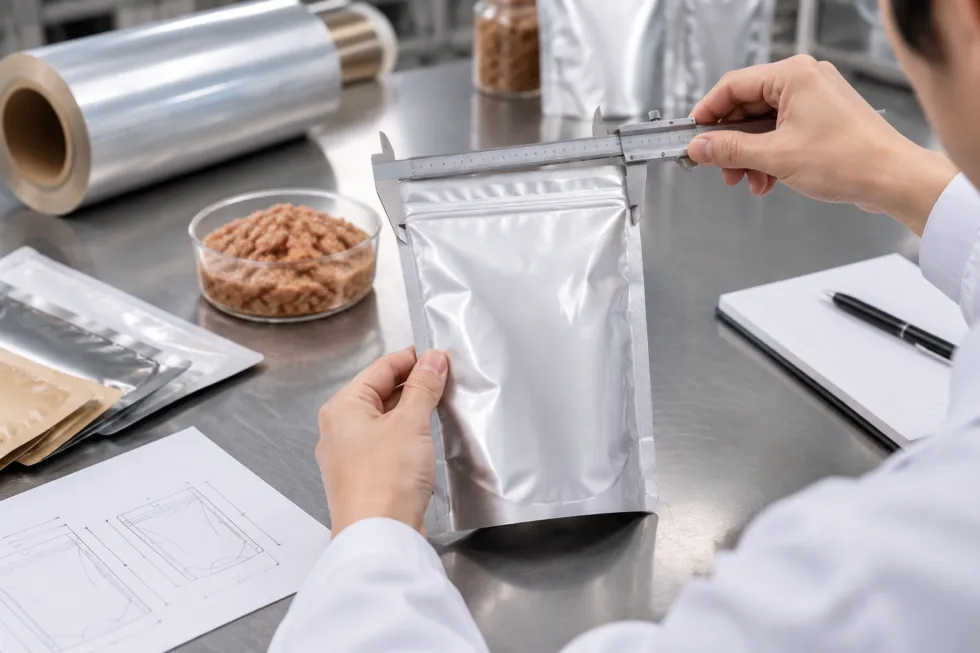
The factory’s flexible-packaging FAQ asks how much product goes into each package, where the product is stored, whether there are retailer or space constraints, and how the package will be transported.
Its pet-food packaging material also notes that the consistency of the contents—such as dry, wet, or liquid food—can affect the material and packaging type selected.
Fill Weight and Product Condition
For an RFQ, specify:
- Target fill weight
- Product form and consistency
- Filling temperature
- Whether the pouch is filled close to the rim or with defined headspace
- Single-use or multi-use requirements
Do not infer fill weight from the external pouch dimensions.
Filling and Sealing Conditions
Filling and sealing information is particularly relevant to retort projects. FDA guidance notes that food, grease, moisture, or other contaminants in the seal area can contribute to weak or defective seals, and identifies temperature, pressure, and dwell time as key sealing factors. (fda.gov)
If the filling or sealing process is not yet fixed, mark it as pending rather than allowing the supplier to guess.
Storage, Transport, and Market Requirements
The factory FAQ also asks where the product is sold, where it is stored, how it is transported, and how long it needs to be stored.
State the destination market as well. The applicable documentation or regulatory requirements depend on the market, so this article does not assume a specific jurisdiction.
What Printing and Setup Fees Should Be Clarified?
Ask for a quotation that separates the main commercial variables rather than returning only one pouch price.
| Quote item | Buyer question |
|---|---|
| Pouch unit price | What is the price at each proposed quantity? |
| Quantity per design | What minimum applies to each artwork? |
| Total quantity | Does combining six designs change the commercial calculation? |
| Printing method | Is the price based on digital or gravure printing? |
| Cylinder/setup | Is setup required, and is it charged separately? |
| Sample/proof | What is included before mass production? |
| Production | What timing applies after approval? |
| Other charges | Are there additional project costs? |
The documented production workflow separates design, cylinder preparation, and production, which is useful when asking how a quotation is constructed.
No project-specific unit price or setup fee is confirmed in the available materials, so no dollar amount should be assumed.
Pouch Unit Price
Unit price should always be tied to a defined quantity and specification. A “price per bag” without quantity per design is difficult to compare in a six-SKU project.
Printing and Cylinder / Setup Costs
For gravure, ask whether cylinder preparation is required for the six designs and how the setup cost is allocated. The factory lists cylinder preparation as a 5–7 day process reference.
For digital printing, ask what project-specific prepress or setup charges apply. A digital press description that mentions “no MOQ” should not be interpreted as proof that every project charge is zero.
Sample and Proof Costs
Clarify what is included in the sample or proof stage and what needs buyer approval. For a retort pouch, approval should cover the physical packaging and process suitability, not just artwork appearance.
What Should You Send a Supplier for a Six-Design Retort Pouch Quote?
A quote-ready RFQ should allow the supplier to evaluate quantity, printing, material, and processing together.
Product
State that the pouch is for wet pet food and describe the product form. If it contains chunks, sauce, paste, or other components, include that information.
Fill Weight
Give the target quantity per pouch. If it is not finalized, provide a provisional range and label it clearly.
Pouch Dimensions
Provide the target finished dimensions:
12 × 10 × 3 cm
If the 3 cm measurement represents a gusset or another specific dimension, include a drawing or clarify the intended construction.
Quantity per Design
List all six designs and the quantity required for each. If the quantities are equal, state the common quantity; otherwise provide the actual number for each design.
Artwork
State whether the artwork is final, in progress, or requires design support. The factory material describes OEM/ODM customization and design support.
Retort, Filling, and Sealing
Provide the available retort process, filling temperature, filling method, sealing method, and any known headspace or fill philosophy. The factory FAQ specifically asks about filling temperature and whether the pouch is filled to the rim.
Destination Market and Timeline
State where the product will be sold and give the required sampling and production dates, if known.
The factory material lists design at 1–3 days, cylinder preparation at 5–7 days, and production at 2–4 weeks. Treat these as planning references; the actual project schedule depends on the final specification, artwork approval, printing route, and production conditions.
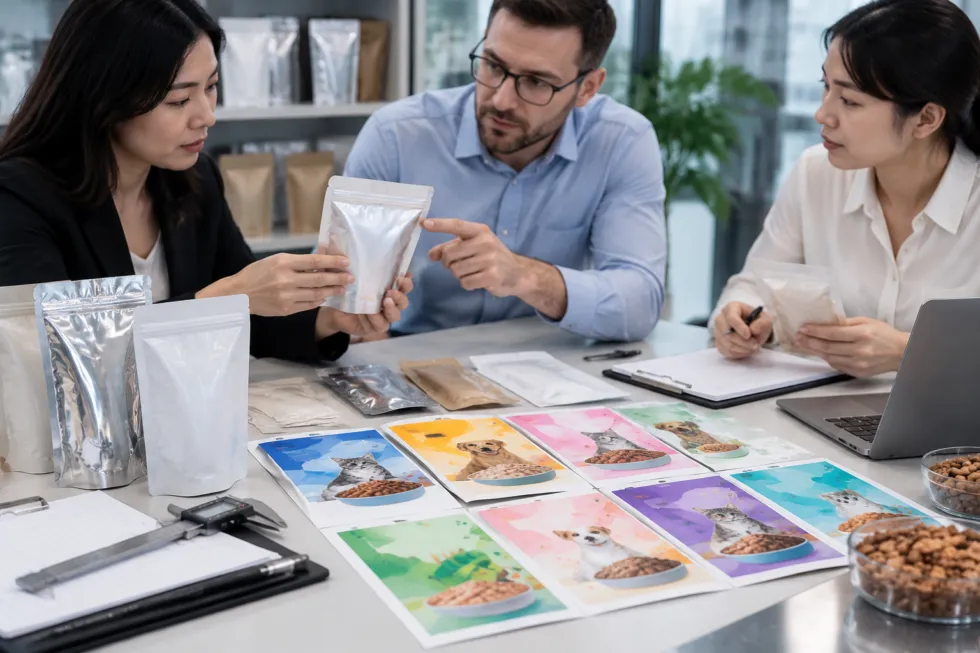
A Practical RFQ Checklist for This Six-Design Project
Before sending the request, confirm that it includes:
- Wet pet food description
- Fill weight per pouch
- Finished size: 12 × 10 × 3 cm
- Six designs
- Quantity per design
- Total project quantity
- Artwork status
- Retort process information
- Filling temperature and method
- Sealing method
- Storage and transport conditions
- Destination market
- Target timeline
- MOQ per design requested
- Digital vs. gravure quotation requested
- Unit price requested at the proposed quantity
- Setup/cylinder fees requested separately
The useful RFQ is not the longest one. It is the one that removes the questions a supplier would otherwise have to guess.
Request a Project-Specific Quote
For a six-design wet pet food retort pouch project, ask for two things at the same time: the lowest practical quantity and the commercial structure behind that quantity.
Send the six design quantities, 12 × 10 × 3 cm target size, fill weight, product condition, retort process, filling and sealing information, artwork status, destination market, and timeline. Then ask the supplier to confirm MOQ per design, total project quantity, printing route, unit price, and printing/setup or cylinder fees.
That approach gives procurement, packaging, and QA teams the information needed to compare the quote without turning an unconfirmed MOQ, price, or retort condition into a promise.