
For packaging buyers, an incorrectly sized pouch can increase material costs, create sealing problems and make the finished package look underfilled or overcrowded. This guide explains how to select a practical Mylar bag size before requesting samples or starting printed production.
What Is a Mylar Bag?
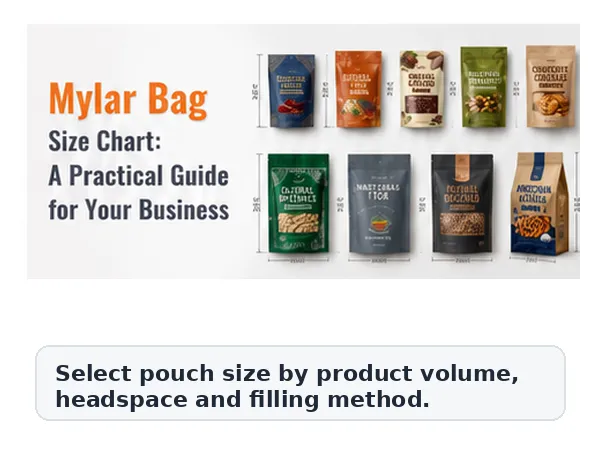
“Mylar bag” is commonly used as a general term for high-barrier flexible packaging made from laminated polyester, metallized film or aluminum foil structures.
Although these bags may look similar from the outside, their material structures can be very different. A transparent PET/PE pouch may be suitable for a general dry product, while PET/VMPET/PE or PET/AL/PE may be required when stronger protection against oxygen, moisture and light is needed.
Mylar packaging is widely used for:
- Coffee and tea
- Dried fruit and snacks
- Powders and supplements
- Pet treats and pet food
- Spices and food ingredients
- Dry herbs and specialty retail products
Honghai Packaging manufactures custom Mylar bags with customized dimensions, materials, printing, zippers, windows, finishes and functional features for B2B packaging projects.
Why Mylar Bag Size Matters
A pouch that is too small can be difficult to fill and may leave insufficient space for the zipper and final heat seal. A pouch that is too large can look underfilled, use more packaging material and increase carton, storage and transportation costs.
The selected bag size directly affects the following areas:
- Filling efficiency: The opening must be wide enough for manual or automatic filling.
- Seal reliability: Product particles should not enter the heat-sealing area.
- Shelf appearance: The package should appear properly filled without being overstretched.
- Product protection: Excessive internal air may affect oxygen-sensitive products.
- Packaging cost: Oversized bags use more film and occupy more shipping space.
Mylar Bag Size and Capacity Chart
The following chart provides practical starting points for common retail and wholesale packaging projects.
Important: These sizes are for reference only. The same product weight can require different pouch dimensions because coffee beans, powder, dried fruit, nuts and pet treats have different densities and shapes.
| Typical Fill Weight | Suggested External Size | Recommended Bag Style | Common Applications |
|---|---|---|---|
| 1–3.5 g | 70 × 100 mm 2.8 × 3.9 in | Three-side seal pouch | Samples, herbs, accessories and portion packs |
| 3.5–7 g | 90 × 130 mm 3.5 × 5.1 in | Flat pouch or small stand-up pouch | Tea, spices, supplements and trial-size products |
| 7–14 g | 100 × 150 mm 3.9 × 5.9 in | Zipper pouch or three-side seal pouch | Seasonings, snack portions and dry ingredients |
| 14–28 g | 120 × 180 mm 4.7 × 7.1 in | Stand-up zipper pouch | Dried fruit, small snacks, coffee and powders |
| 50–100 g | 140 × 210 mm 5.5 × 8.3 in | Stand-up pouch with bottom gusset | Nuts, dried foods, pet treats and snacks |
| 200–250 g | 160 × 230 mm 6.3 × 9.1 in | Stand-up or flat-bottom pouch | Coffee beans, granola, candy and dried fruit |
| 500 g | 190 × 280 mm 7.5 × 11 in | Flat-bottom or side-gusset pouch | Coffee, grains, flour, pet food and bulk snacks |
| 1 kg | 230 × 330 mm 9.1 × 13 in | Flat-bottom or quad-seal pouch | Food ingredients, coffee, powders and pet products |
| 2–2.5 kg | 300 × 420 mm 11.8 × 16.5 in | Side-gusset or quad-seal bag | Bulk ingredients, dry food and pet food |
| 5 kg | 380 × 550 mm 15 × 21.7 in | Heavy-duty side-gusset bag | Commercial food, ingredients and large pet food packs |
External Size vs. Usable Internal Size
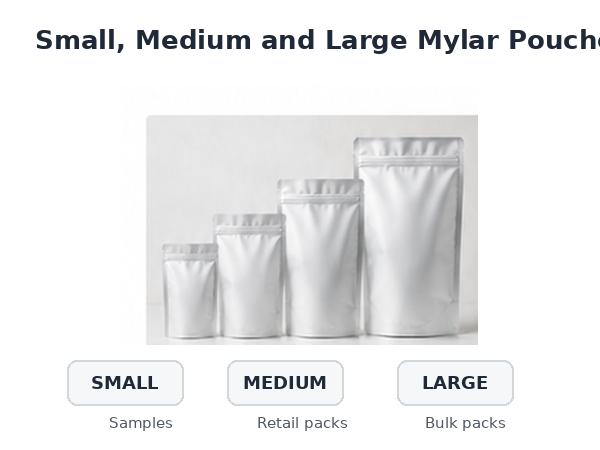
The dimensions shown on a pouch specification normally refer to the external width and height. The entire external area cannot be used for filling.
The usable internal space is reduced by:
- Top and side heat seals
- Zipper position
- Tear notch position
- Bottom seal and gusset construction
- Required clearance above the product
For example, a pouch with an external height of 200 mm will have less than 200 mm of usable filling height because the zipper, top seal and bottom gusset occupy part of the space.
This is why capacity should not be calculated using external width multiplied by external height alone.
How to Calculate the Right Mylar Bag Size
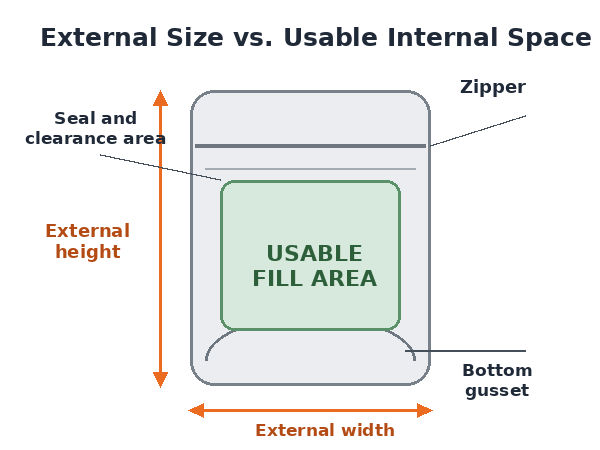
1. Start With Product Volume
Net weight is important for labeling and sales, but pouch dimensions are mainly determined by product volume.
Lightweight snacks, coffee beans and irregular dried products usually occupy more space than dense powders of the same weight. A physical product sample provides a more accurate result than estimating from weight alone.
2. Confirm the Filling Method
Manual filling normally requires a wider pouch opening so operators can load the product without contaminating the sealing area.
Automatic filling equipment may require specific pouch widths, registration marks, zipper positions or roll-film dimensions. When possible, provide your packaging supplier with the filling machine model or equipment specification.
3. Allow Enough Headspace
Headspace is the distance between the top of the product and the zipper or final sealing area.
Enough headspace helps prevent powders, crumbs, oil or product pieces from entering the heat seal. It also gives the pouch enough room to close correctly.
For many dry products, approximately 20–50 mm of space above the product is a useful starting point. Irregular products and powders may require additional clearance.
4. Select the Correct Gusset
A bottom gusset allows a stand-up pouch to expand and remain upright on the shelf. A side gusset provides additional capacity and is commonly used for coffee, grains, pet food and larger dry-food packs.
A flat-bottom pouch provides a stable base and offers front, back, bottom and side panels for branding.
Two pouches with the same width and height can have very different capacities when their gusset depths are different.
5. Consider Product Shape and Puncture Risk
Sharp ingredients, dehydrated food, bones, hard pet treats and irregular products can create pressure points against the pouch wall.
These applications may require a nylon-reinforced structure or a thicker laminate rather than simply using a larger pouch.
How Bag Style Changes Capacity
Bag style affects filling volume, shelf stability, opening width and printable area.
Three-Side Seal Pouch
A compact and cost-effective format for samples, small portions, powders, spices and flat products.
Stand-Up Pouch
A versatile retail format with a bottom gusset. It provides good shelf presentation and can include a zipper, window, hang hole or tear notch.
Flat-Bottom Pouch
A premium format with a stable base and five printable panels. It is commonly used for coffee, snacks, pet food and higher-value products.
Side-Gusset Pouch
A high-capacity format suitable for coffee, grains, powders, ingredients and larger product weights.
Quad-Seal Bag
A reinforced structure that distributes weight across four vertical seals. It is suitable for heavier contents and larger packaging formats.
Choosing the Right Mylar Bag Thickness
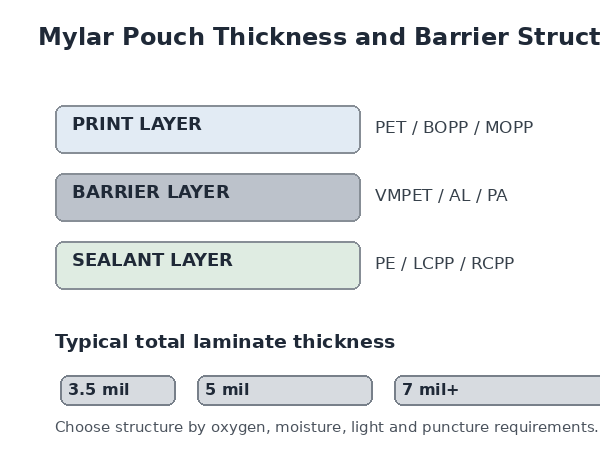
Film thickness is commonly expressed in mils or microns. One mil equals 0.001 inch.
For laminated packaging, buyers should confirm whether the quoted thickness refers to the complete laminate or only one layer of the material.
| Typical Total Thickness | Recommended Use | Main Consideration |
|---|---|---|
| 2.5–3.5 mil | Samples and lightweight dry products | Lower material use with limited puncture resistance |
| 4–5 mil | Standard retail food and specialty products | Balanced stiffness, protection and cost |
| 5–7 mil | High-barrier or puncture-sensitive applications | Improved durability and handling strength |
| 7 mil and above | Heavy-duty storage and large-volume products | Maximum strength with higher material cost |
Thickness alone does not determine shelf life. A thinner aluminum foil laminate may provide a higher oxygen barrier than a thicker transparent laminate.
The material structure, barrier values, sealing performance and distribution conditions should be considered together.
Common Material Structures for Mylar Bags
PET/PE
A transparent structure for general dry products that do not require maximum light protection. It provides good printability and heat-sealing performance.
PET/VMPET/PE
A metallized laminate that provides improved protection against oxygen, moisture and light. It is commonly used for coffee, snacks, supplements and dried food.
PET/AL/PE
An aluminum foil laminate for products requiring a very high barrier against oxygen, moisture and light. It is suitable for sensitive powders, food ingredients and longer shelf-life products.
PET/NY/PE
A nylon-reinforced laminate that improves puncture resistance and mechanical strength. It is suitable for hard, sharp, irregular or heavier products.
Mono-Material PE or PP
Mono-material structures may be considered where local recycling systems accept flexible PE or PP packaging. Barrier requirements, filling temperatures and sealing conditions should be reviewed before changing from a conventional laminate.
Information to Send Your Packaging Supplier
A complete packaging brief helps the supplier recommend a suitable bag size and reduces specification changes after artwork approval.
Include the following information when requesting a quotation:
- Product name and product type
- Net weight per pouch
- Approximate product density or a physical sample
- Preferred bag style
- Required external dimensions
- Bottom or side gusset depth
- Material and barrier requirements
- Filling and sealing method
- Required zipper, window, valve, handle or hang hole
- Estimated order quantity
- Artwork and printing requirements
- Delivery destination and target date
Should You Request Samples Before Production?
Yes. A stock sample or unprinted size sample allows your team to test filling volume, opening width, shelf presentation and sealing compatibility before printed production starts.
For products with unusual density or irregular shapes, a physical filling test is more reliable than selecting a size from an online chart.
Commercial packaging projects should also consider seal tests, drop tests, transportation tests and shelf-life tests where required.
Frequently Asked Questions
Can one bag size be used for several product weights?
Sometimes. A brand may use the same pouch width for several SKUs and adjust the height or fill level. However, an underfilled package may look unattractive, while an overfilled pouch may not seal correctly.
Does the zipper reduce usable capacity?
Yes. The zipper and top seal occupy part of the internal height. The product fill line must remain below the zipper so the closure and final heat seal remain clean.
Are pouch dimensions listed as width × height?
Flat pouches are normally listed as width × height. Stand-up, flat-bottom and side-gusset bags should also include the gusset depth. Confirm the supplier’s measurement format before approving the specification.
What is the best Mylar bag size for coffee beans?
Coffee bag capacity depends on bean density, roast level, valve position and bag style. Dark-roasted beans usually occupy more volume than denser products of the same weight, so a physical filling test is recommended.
What is the minimum order quantity for custom Mylar bags?
The minimum order quantity for many Honghai Packaging custom pouch projects starts from 1,000 pieces. The final MOQ depends on the pouch dimensions, material structure, printing process and required features.
Can a Mylar pouch include a zipper, window and hang hole?
Yes. These features can be combined when the pouch dimensions provide enough space. Their positions should be confirmed during the dieline and artwork approval stage.
Can you produce custom dimensions?
Yes. Width, height and gusset depth can be customized according to the product volume, filling process and shelf presentation requirements.
Final Recommendation
A Mylar bag size chart is useful during early project planning, but it should not replace actual product testing.
The most reliable specification is based on:
- Actual product volume
- Product density and shape
- Filling and sealing method
- Required headspace
- Bag style and gusset depth
- Material and barrier requirements
- Storage and transportation conditions
Honghai Packaging can review your product information, recommend a suitable pouch size and material structure, and prepare samples before printed production.
Sizes, materials, printing, zippers, windows, hang holes and surface finishes can be developed according to your commercial packaging requirements.
Need Help Confirming Your Mylar Bag Size?
Send us your product weight, approximate volume, preferred bag style and estimated order quantity. Our packaging team will recommend a practical size and material structure for your project.