
This guide explains how to plan a custom coffee packaging project from the initial product brief through sampling and production approval.
Why Coffee Packaging Design Matters
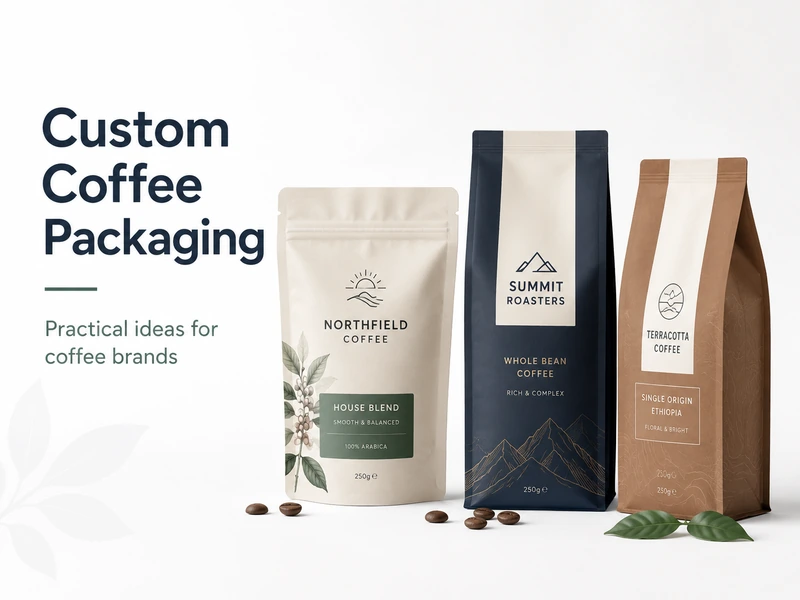
Customers may first notice the colors and graphics, but a packaging buyer must also consider how the bag performs before, during and after filling.
A practical coffee bag should:
- Protect aroma and flavor during the intended shelf life
- Allow roasted coffee gases to escape when required
- Work with the roaster’s filling and sealing process
- Remain stable during storage and transportation
- Provide enough space for branding and product information
- Support retail, wholesale or e-commerce presentation
A visually attractive bag that does not seal properly or fit the filling equipment can create delays, product waste and unnecessary repacking costs.
Honghai Packaging supplies custom coffee bags with customized sizes, material structures, printing, degassing valves, zippers and surface finishes for commercial coffee packaging projects.
Start With the Coffee Product
The packaging specification should begin with the coffee rather than the artwork.
Before selecting a bag, confirm the following information:
- Whole bean or ground coffee
- Net weight per bag
- Roast level
- Expected shelf life
- Time between roasting and packing
- Manual or automatic filling method
- Retail, wholesale or subscription use
- Storage and transportation conditions
Whole coffee beans and ground coffee of the same weight do not always occupy the same volume. Darker roasted beans may also require more space because they are generally less dense.
For this reason, final bag dimensions should be confirmed with an actual filling test rather than estimated from net weight alone.
Choose the Right Coffee Bag Style
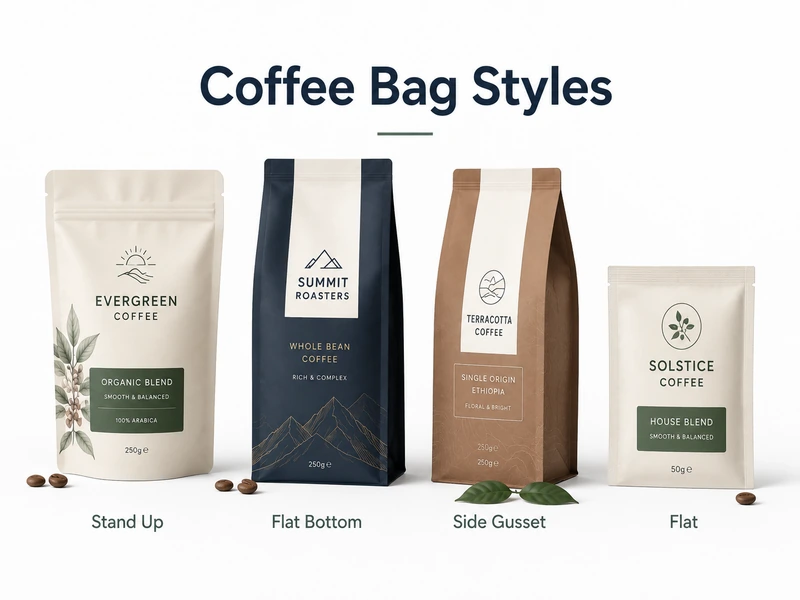
The selected bag format affects capacity, shelf stability, filling speed, printable area and unit cost.
Stand-Up Coffee Pouches
Stand-up pouches use an expandable bottom gusset that allows the bag to remain upright after filling.
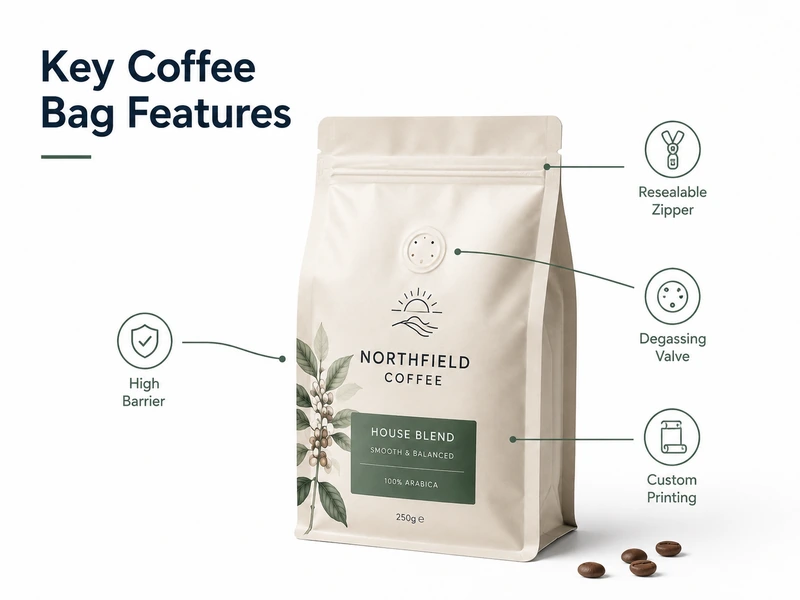
They are suitable for retail coffee packs, sample products and smaller pack sizes. Common options include a resealable zipper, tear notch and one-way degassing valve.
This format provides a large front panel for branding while remaining lightweight and easy to pack into shipping cartons.
Flat-Bottom Coffee Bags
Flat-bottom bags have a rectangular base and a structured shape. They provide five printable panels: front, back, two sides and bottom.
This style is commonly selected by specialty coffee brands that want strong shelf presence and additional room for product information, roast notes and brand storytelling.
The stable base also supports organized retail displays and premium product presentation.
Side-Gusset Coffee Bags
Side-gusset bags expand along both sides and provide good capacity for whole beans or ground coffee.
They are often used for medium and larger pack sizes, including food-service and wholesale applications.
The upper portion can be closed with a heat seal, tin tie or another closure depending on the project requirements.
Quad-Seal Coffee Bags
Quad-seal bags use four vertical corner seals to create a more structured package.
The design distributes product weight across the bag and provides clear front, back and side panels. It is suitable for larger retail packs and commercial coffee products requiring additional shape stability.
Three-Side Seal and Flat Pouches
Flat coffee pouches are suitable for samples, single-serve products, drip coffee packs and smaller portions.
Because they use less material and do not require a bottom gusset, they can provide a practical option for compact products and promotional sampling.
Spout Pouches for Coffee Products
Spout pouches may be used for cold brew, coffee concentrate and other liquid coffee products.
The material structure, spout size, cap type, filling temperature and storage conditions must be confirmed before production.
Buyer tip: Do not select a bag style based only on appearance. Confirm the required filling volume, opening width, valve position and carton arrangement before approving the format.
Select the Material and Barrier Structure
Roasted coffee is sensitive to oxygen, moisture and external odors. The packaging structure should provide suitable protection for the intended shelf life and distribution conditions.
PET/PE
A transparent laminate that may be used for applications with moderate barrier requirements. It offers good printability and heat-sealing performance.
PET/VMPET/PE
A metallized structure commonly used for retail coffee packaging. The metallized layer improves protection against oxygen, moisture and light.
PET/AL/PE
An aluminum foil laminate for projects requiring a very high barrier. It provides strong protection from oxygen, moisture and light but does not allow the product to be viewed through the package.
Kraft Paper Laminates
Kraft paper can create a natural or handcrafted visual appearance. The paper is normally combined with inner film layers that provide sealing and barrier performance.
A kraft paper appearance does not automatically mean the package is recyclable. Buyers should confirm the complete material structure before making sustainability claims.
Mono-Material PE or PP
Mono-material options may support recycling objectives where the destination market has a suitable collection and recycling system.
Before changing from a conventional laminate, the new structure should be tested for oxygen barrier, seal strength, valve compatibility, stiffness and transportation performance.
Does Your Coffee Bag Need a Degassing Valve?
Freshly roasted coffee releases carbon dioxide after roasting. If the coffee is packed while degassing continues, gas can build up inside a fully sealed bag.
A one-way degassing valve allows carbon dioxide to leave the package while helping prevent outside oxygen from entering.
A valve is commonly recommended when:
- Coffee is packed shortly after roasting
- The package is fully sealed
- The product requires an extended retail shelf life
- Bag swelling would create storage or display problems
The valve position should be confirmed according to the bag style, fill level and artwork layout. It must not interfere with the zipper, heat seal or important printed information.
Plan the Coffee Packaging Design Around the Bag
Artwork should be created using the final approved dieline. Designing before the dimensions and features are confirmed often leads to repeated adjustments.
The dieline should clearly show:
- Front, back and side printing panels
- Top and bottom sealing areas
- Zipper position
- Degassing valve position
- Gusset folds
- Tear notch position
- Barcode and regulatory information areas
Important logos, text and barcodes should remain inside the safe printing area and away from folds, seals and bag edges.
A Practical Coffee Packaging Design Process
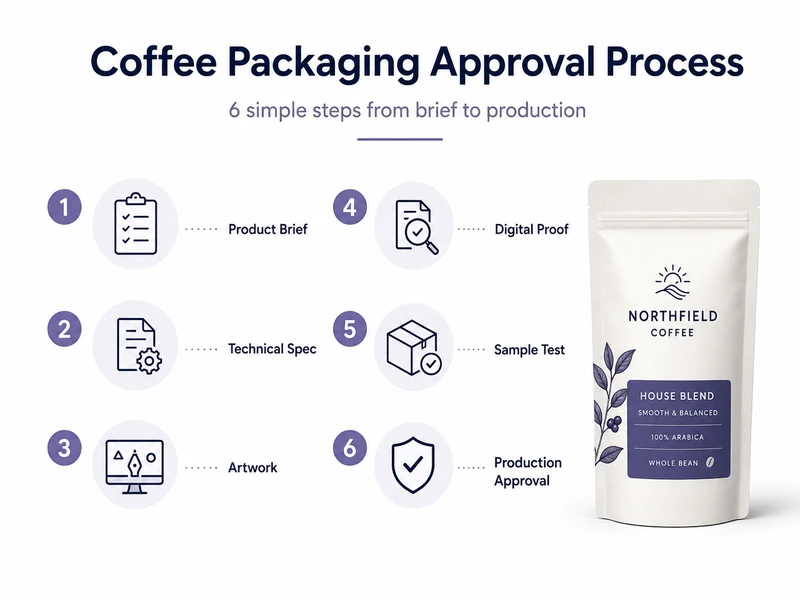
1. Prepare the Product Brief
Provide the coffee type, net weight, preferred bag style, expected order quantity, filling method and destination market.
Existing packaging samples or reference bags can help the manufacturer understand the preferred size and handling characteristics.
2. Confirm the Technical Specification
The bag size, gusset, material structure, thickness, zipper, valve and printing method should be confirmed before artwork preparation.
This stage is also the right time to review whether the package will be filled manually or by machine.
3. Create or Adapt the Artwork
Artwork is placed on the approved dieline. The design team checks the bleed area, safe zone, folds, barcode size, printing colors and feature positions.
Brands with several coffee origins or roast levels should plan a consistent visual system that makes each SKU easy to identify.
4. Review the Digital Proof
The digital proof confirms artwork placement, text, dimensions and color references.
Buyers should check all product names, weights, ingredients, contact details, barcodes and market-specific labeling before approval.
5. Test a Physical Sample
A stock sample or unprinted size sample can be used to check capacity, filling, sealing and shelf presentation.
For important color or finish requirements, a printed proof or sample may be needed before full production.
6. Approve Production
Production should begin only after the specification and artwork are approved in writing.
A controlled approval process helps prevent misunderstandings about dimensions, materials, finishes and printed content.
Custom Printing and Surface Finishes
The printing method should be selected according to the order quantity, number of SKUs, artwork complexity and repeat-order plan.
Digital Printing
Digital printing is useful for smaller orders, product launches and projects with several designs.
It does not require traditional printing cylinders, making it suitable for short runs and faster artwork changes.
Rotogravure Printing
Rotogravure printing is commonly used for larger repeat orders requiring stable colors and a competitive unit cost.
Printing cylinders are required, so setup cost, total quantity and repeat-order expectations should be considered during quotation.
Popular Surface Finishes
- Gloss finish
- Matte finish
- Soft-touch finish
- Spot UV
- Metallic effect
- Gold or silver stamping
Information Needed for a Coffee Bag Quotation
A complete inquiry allows the packaging manufacturer to prepare a more accurate recommendation and quotation.
| Information | Why It Is Needed |
|---|---|
| Whole bean or ground coffee | Helps determine volume and barrier requirements |
| Net weight per bag | Provides a starting point for bag sizing |
| Preferred bag style | Determines the structure, gusset and printable panels |
| Bag dimensions | Required for material calculation and pricing |
| Valve and zipper requirements | Affects construction and feature placement |
| Filling method | Ensures compatibility with the packing process |
| Number of artwork designs | Helps determine printing setup and SKU quantities |
| Estimated order quantity | Helps select the appropriate printing method |
| Delivery destination | Required for freight and export planning |
Common Coffee Packaging Mistakes
Choosing the Bag Before Testing the Product Volume
Net weight alone does not confirm the required bag size. Always test the actual coffee in a physical sample.
Placing Important Artwork Across Folds or Seals
Text and logos placed too close to bag folds may become distorted or difficult to read.
Ignoring the Filling Equipment
A bag that looks correct may still be incompatible with the filling line. Opening width, zipper position and dimensional tolerances should be reviewed in advance.
Adding Features Without a Clear Purpose
Windows, zippers, valves and special finishes can add value, but they also affect cost and available printing space. Each feature should support a functional or commercial requirement.
Approving Artwork Without Checking Product Details
Incorrect weights, roast names, barcodes or regulatory text can delay production and create unusable packaging inventory.
Frequently Asked Questions
What is the minimum order quantity for custom coffee bags?
The minimum order quantity for many Honghai Packaging custom coffee bag projects starts from 1,000 pieces. The final MOQ depends on the size, material, printing method and required features.
Can I use different designs for several coffee origins?
Yes. Multiple designs can be produced depending on the printing method, bag size, material and quantity assigned to each artwork.
Can you help determine the correct coffee bag size?
Yes. Provide the coffee type, net weight and preferred bag style. For the most accurate result, test the product using a physical size sample.
Can I request samples before placing a bulk order?
Yes. Stock and unprinted size samples can be used to review materials, capacity, filling and sealing performance before printed production.
Do all coffee bags require a degassing valve?
No. The need for a valve depends on the coffee, roasting and packing schedule, sealing method and expected shelf life.
Can kraft coffee bags provide a high barrier?
Yes. Kraft paper can be laminated with metallized film, aluminum foil or other barrier layers. Performance depends on the complete laminate rather than the paper surface alone.
How long does custom coffee bag production take?
Production time depends on the material, printing method, order quantity and bag features. The final schedule should be confirmed after the specification and artwork are approved.
Final Recommendation
A successful coffee packaging project balances brand design with practical packaging performance.
Before bulk production, confirm the coffee volume, bag style, material structure, valve position, zipper, filling method and artwork using an approved specification and physical sample.
Honghai Packaging works with coffee roasters, brands, wholesalers and distributors to develop custom coffee bags for retail and commercial applications.
Start Your Custom Coffee Bag Project
Send us your coffee type, filling weight, preferred bag style, required features and estimated quantity. Our packaging team will help you confirm a suitable size, material and printing solution.